Patient Portal Update: MyCarePlus is being replaced with Ontada Health. Learn More
HIPAA Alert: Potential Data Breach. Learn More

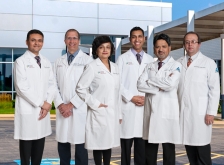
Learn more about our advanced cancer treatments including chemotherapy, surgery and more.
View Cancer Treatments
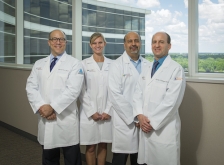
Find helpful information on local and national cancer resources to help with questions and concerns.
Cancer impacts not only a person’s health but also their finances. While advanced cancer treatment can be life-saving, it often comes with high costs. Even with health insurance, many cancer patients face unexpected out-of-pocket medical expenses on an already constrained budget. The financial burden of a cancer diagnosis can lead to anxiety, causing some patients to delay treatment, skip follow-up visits, or stop taking medications. As you can imagine, these actions have a negative effect on their overall health outcomes.
Cancer treatment costs continue to rise at an alarming rate. The financial burden of cancer treatment can lead to significant hardship for patients. Although these costs do not affect all cancer patients equally, they are still very concerning. According to the American Cancer Society Cancer Action Network, 61% of cancer patients struggle with the costs associated with their cancer care, including those who have insurance, such as Medicare. Depending on the insurance plan, it can be unclear how much of the cancer treatments will be covered, making financial planning even harder. This uncertainty about potential costs can be overwhelming for many patients.
Patients trying to manage the cost of cancer treatment often find themselves in a mountain of credit card debt, filing for bankruptcy, losing their homes, dealing with bill collectors, depleting their life savings, and experiencing other financial setbacks.
Receiving affordable cancer care does not mean compromising on quality.
Illinois Cancer Specialists is an independent cancer center that provides the same quality of care as hospital-affiliated oncology departments. We use the same advanced technologies and personalized treatments at a more affordable price.
Cancer care at hospital outpatient departments (HOPDs) often costs much more than care offered at independent cancer facilities. A large 2023 study by the Health Care Cost Institute looked at employer-sponsored insurance claims from 2014 to 2020. The study found that while spending on chemotherapy increased for all patients during this time, it rose much more for those treated in Hospital Outpatient Departments (HOPDs) than for those treated in a doctor's office.
Chemotherapy in HOPDs went up nearly 80%, from just under $10,000 to $17,493. Meanwhile, spending for office-based chemotherapy grew by 26%, from $5,377 to $6,775. Out-of-pocket costs also increased more for HOPD treatments, rising 45% compared to a 25% increase for office-based treatments.
According to the Community Oncology Alliance, patients may pay up to 50% less for cancer care at independent oncology practices compared to hospital outpatient departments.
Recent studies have shown the benefits of independent oncology practices compared to hospital settings.
Some key findings include:
These cost savings not only help financially, but they also provide emotional relief from the cost burden of cancer treatment.
Radiation therapy is another area of cancer care where costs vary depending on where the patient chooses to receive treatment. A 2022 study found that 16,818 insured cancer patients saved 61.6% on same-day visits and 57.1% on total radiation treatment costs when treated in a physician's office instead of a hospital.
While managing the costs of cancer care is important, other factors also matter, such as the patient experience and quality of care. At Illinois Cancer Specialists, patients can expect:
Illinois Cancer Specialists is an independent practice with multiple locations across Illinois, including Arlington Heights, Chicago, Crystal Lake, Elgin, Hoffman Estates, and Niles. We are the only community oncology practice and cancer research institute in Illinois, offering access to the most advanced cancer treatments, including clinical trials, right here on the greater Chicago area. Find a location nearest you to request an appointment with one of our cancer doctors.
Cancer treatment often leads to side effects that can range from mild discomfort to significant disruptions in daily life. Thankfully, the cancer care team at Illinois Cancer Specialists is here to help you prevent, treat, or manage many of these side effects.
The intensity and timing of side effects can vary throughout your treatment, depending on the type of therapy you receive. For instance, the side effects of chemotherapy can differ from those of radiation therapy.
While some side effects can be prevented, many others can be treated. The specific side effects and their severity can vary from person to person, largely depending on the treatment type. Fortunately, there are effective ways to manage these side effects.
This section aims to provide you with information about cancer treatment, potential side effects, and ways to manage them. Click a topic below to learn more.
In February, our practice was impacted by the national outage experienced by Change Healthcare because of a cyberattack. Change Healthcare is a healthcare technology company, part of Optum and United Healthcare, that provides services used by much of the US healthcare system, including our practice.
We have remained in close contact with Change Healthcare as they investigate and address this issue.
Change Healthcare has begun issuing customer notifications related to the February 2024 cyberattack. On April 22, 2024, Change Healthcare publicly confirmed the impacted data could cover a substantial proportion of people in America. More recently, on June 20, 2024, Change Healthcare notified our practice’s management company that some of its data was compromised.
At this time, Illinois Cancer Specialists has not been notified of any specific patients of the practice whose protected health information has been affected by the incident.
For more information, please visit https://www.changehealthcare.com/hipaa-substitute-notice
Welcome to Illinois Cancer Specialists Pharmacy. We appreciate the opportunity to serve you with all your specialty pharmacy needs.
Our primary goal is to provide exceptional quality care. Our pharmacy team understands that complex and rare conditions require a higher level of care and support. We will work collaboratively with you, your physicians, and your family to make sure you have access to your specialty medications to help manage your complex medical condition
If you have any of the following symptoms, please call our office before coming in for your appointment: fever, cough or body aches. Or if you've had close contact with someone who has been exposed to the Coronavirus please call before coming to your appointment.
Given what we currently know about COVID-19 and the Omicron variant, CDC is shortening the recommended time for isolation from 10 days for people with COVID-19 to 5 days, if asymptomatic, followed by 5 days of wearing a mask when around others. The change is motivated by science demonstrating that the majority of SARS-CoV-2 transmission occurs early in the course of illness, generally in the 1-2 days prior to the onset of symptoms and the 2-3 days after. Therefore, people who test positive should isolate for 5 days and, if asymptomatic at that time, they may leave isolation if they can continue to mask for 5 days to minimize the risk of infecting others.
Additionally, CDC is updating the recommended quarantine period for those exposed to COVID-19. For people who are unvaccinated or are more than six months out from their second mRNA dose (or more than 2 months after the J&J vaccine) and not yet boosted, CDC now recommends quarantine for 5 days followed by strict mask use for an additional 5 days. Alternatively, if a 5-day quarantine is not feasible, it is imperative that an exposed person wear a well-fitting mask at all times when around others for 10 days after exposure. Individuals who have received their booster shot do not need to quarantine following exposure but should wear a mask for 10 days after the exposure. For all those exposed, best practice would also include a test for SARS-CoV-2 at day 5 after exposure. If symptoms occur, individuals should immediately quarantine until a negative test confirms symptoms are not attributable to COVID-19.
Love Campaign Page Destination
Diagnostic imaging tests and scans are important for accurately diagnosing and staging cancer, as well as tracking the progress of treatment. Our in-office imaging center provides the most advanced imaging services available. From Positron Emission Tomography (PET) and Computed Tomography (CT) to combination PET/CT scans, you can schedule and receive the tests and scans required for your personalized care. Our Niles location features a fixed 3 ring combination PET/CT.
Illinois Cancer Specialists is an ACR Accredited Facility for both CT and PET. This means our facility has met the standards for the highest level of quality and radiation safety. Our staff has been thoroughly reviewed and accredited by the American College of Radiology, a national professional organization serving radiologists, radiation oncologists, nuclear medicine physicians and medical physicists.
Computerized Tomography, commonly referred to as CT or CAT scan, is an examination, which takes x-ray "slices" of you in a two-dimensional format as you move through a “donut shaped” machine. The examination is painless and most exams are completed in 30 to 45 minutes or less. Your exam is interpreted by a radiologist who in turn gives your physician a written report of the exam results. Your physician will notify you of the results.
CT allows your physician to evaluate internal organs and tissues in ways that regular X-Rays cannot.
PET stands for Positron Emission Tomography and is used for detection and diagnosis of cancer including lung, breast, melanoma, lymphoma, colorectal, head and neck, ovarian, pancreatic, esophageal and other cancers.
Cancer can spread silently in the body. When symptoms appear, it may signal more advanced disease. PET exposes "silent" disease. PET allows a physician to examine large areas of the body in a single scanning session, producing images of human body functions unobtainable by other imaging techniques. These images capture biochemical processes, such as tissue glucose metabolism, that often cannot be revealed by anatomical imaging with conventional X-ray, CT, or MRI.
The types of cancer that are most commonly evaluated with a PET scan include breast, esophageal, cervical, melanoma, lymphoma, lung, colorectal, head and neck, and ovarian cancers.
PET technology can help physicians answer the critical questions for many cancer patients in one exam including the following:
An Axumin scan is used to help detect any recurrence of prostate cancer. Axumin is a diagnostic imaging agent that is used with a PET/CT scan for men who have had prior treatment of prostate cancer and now have elevated prostate-specific antigen (PSA) levels. An Axumin scan is used to help your doctor determine if and where your prostate cancer has returned. Prior to the PET/CT scan, you will receive the Axumin injection through an IV. The scan will take around 20- 30 minutes.
For your safety and convenience, our expert team can now see patients through scheduled virtual appointments. Virtual appointments are only available for routine office visits and cannot be used for emergency medical care.
Your physician is the best judge of whether a telemedicine visit is appropriate for you. Most patients who will qualify for a telemedicine visit include:
If you are interested in utilizing a virtual appointment for your upcoming routine office visit, let a member of your care team know. Our helpful staff will send you instructions on how to download the application to your smartphone, tablet or computer and information on the next steps for your virtual visit.
TeleMedicine Instructions for Patients
We sincerely hope that you, your family and friends are staying safe during these unprecedented and stressful times.
The coronavirus (COVID-19) pandemic is a rapidly evolving public health concern and it is impacting how we live, work, and stay healthy. We are closely monitoring the developments and taking actions (based on recommendations from the Centers for Disease Control and Prevention (CDC), the American Society of Clinical Oncology (ASCO) and other federal, state and local agencies; along with daily input from our clinical and operational teams) to protect the health and wellness of the community we serve.
In these critical times, we assure you that we are available to care for our patients and are taking all reasonable and possible steps and precautions to keep you and our staff safe.
As a result of COVID-19, you may notice changes in our offices, policies, and procedures. These measures are a part of our commitment to do everything we can to ensure the critical care which our patients need is not interrupted.
These policies will begin March 10th, 2020 and will last until further notice.
If you are experiencing symptoms such as fever, cough, trouble breathing, or other flu-like symptoms (body aches, headaches, fatigue, sore throat, etc.) please call your primary care physician to discuss evaluation and management. If you have a life-threatening emergency, please call 911.
If you have tested positive for Coronavirus (COVID-19) and have an upcoming appointment at our office, we ask that you immediately alert us to ensure the safety of individuals caring for you and other patients at our office.
We also ask that if you test positive for Coronavirus (COVID-19), and you have seen us for an appointment in the last two weeks, please let us know immediately so that we can properly alert the staff and patients who may have been exposed.
We will continue to see new patients and provide care to our existing patients in these times of crisis. If your new patient visit is for a non-urgent issue, we may ask that you reschedule your appointment to a later time. The determination of whether to reschedule your appointment will be made by our physicians.
Before your visit, you may receive an automated or in-person phone call (or both) from our office to confirm your appointment. If you do not receive this call, or need to reschedule your appointment, please call our office at the phone numbers below to confirm or reschedule.
During this call, you will be asked screening questions based on guidance from the Centers for Disease Control & Prevention (CDC) and the Illinois Department of Public Health (IDPH) –
If you, someone in your household, or someone you had close contact with:
please call our office to discuss the next steps before you come to the clinic for your appointment.
Based on your responses, you will be guided on the next steps regarding your visit. Please make sure to provide detailed information to our staff to ensure that your visit can be conducted safely.
Based on your responses, you may be asked to:
Arlington Heights: (847) 259-4482
Chicago Resurrection: (773) 774-0042
Crystal Lake: (815) 363-0066
Elgin: (847) 931-0909
Hoffman Estates: (847) 885-0909
Huntley: (847) 802-7880
Niles: (847) 827-9060
To ensure everyone’s safety, we may ask you to reschedule your appointments, or alter your treatment schedule. The determination to reschedule your appointments or change the treatment schedule will be made by your physician. Routine follow-up visits or non-urgent specialty visits may be deferred until conditions improve. We are working on options to provide care through video visits or conduct visits via telephone or other communication technologies.
For appointments that cannot be delayed or conducted via video/telephone, we are taking steps to keep you safe while you receive care at our sites.
Our staff are screening all patients for symptoms and risk factors of COVID-19 at the clinic sites, based on guidelines from the Centers for Disease Control & Prevention (CDC) and Illinois Department of Public Health (IDPH).
At each visit, you will be asked a few screening questions. Based on your responses to the questions, you may be asked to:
We will be following the below practices to stop the virus from spreading:
Starting immediately, Illinois Cancer Specialists will be limiting visitors who accompany patients to one person per patient. We will also ask the same screening questions to the accompanying visitor and we reserve the right to refuse entry if the visitor is exhibiting symptoms or has a risk of exposure to COVID-19. Visitation will not be allowed for suspected or confirmed patients with COVID-19 or those with active respiratory illness. Visitors under the age of 18 are strongly discouraged from entering our facilities. No children under the age of 12 are allowed to accompany patients into the patient care areas.
We are currently unable to provide testing for COVID-19 at our office sites. If we determine that you need to be tested, you will be provided guidance on reaching the appropriate testing center or physicians for a complete evaluation.
As this is a rapidly evolving situation, we urge you to turn to reliable sources of information such as the Centers for Disease Control (CDC), Illinois Department of Public Health (IDPH) or the World Health Organization (WHO).
To keep abreast of the revisions to our office practices and policies, please visit our website at www.illinoiscancerspecialists.com, or please call our office to speak with your care team directly.
Your health is our priority. We are committed to taking all measures necessary to ensure the health and safety of you and your caregivers, our physicians and staff, and our communities.
{body}Cancer treatment and its impact on patients reaches beyond the doors to our cancer centers. That’s why we offer Nurse and Patient Navigators to assist patients when they’re not in our offices. Ask your oncologist about how a navigator can help you and your family manage the many aspects of cancer treatment and survivorship – before, during and after treatment.
Nurse navigators are experienced oncology certified nurses who help guide patients and their loved ones through the cancer treatment process -- both at the cancer center and once they’ve returned home. Patients often find their navigators to be trusted friends and counselors. The Illinois Cancer Specialists Nurse Navigators will:
{nurse_navigators}
This caring person will help with non-clinical assistance such as coordinating support services available in the community, arranging transportation for those who need it, connect patients with meal services, and more. They will also connect patients who need financial support with local community resources who can provided financial assistance.
 Illinois Cancer Specialists has been recognized by the Quality Oncology Practice Initiative (QOPI®) Certification Program, an affiliate of the American Society of Clinical Oncology (ASCO). The QOPI® Certification Program (QCP™) certifies oncology practices that meet nationally recognized standards for cancer care. QOPI® is a voluntary self-assessment and improvement program launched by ASCO in 2006 to help hematology-oncology and medical oncology practices assess the quality of the care they provide to patients. Through the QOPI program, practices abstract data from patients’ records up to twice per year and enter this information into a secure database. More than 900 oncology practices have registered for the QOPI program.
The QCP was launched in January 2010, and more than 250 practices are currently certified. This certification for outpatient oncology practices is the first program of its kind for oncology in the United States. Oncologists can achieve certification by participating in a voluntary comprehensive site assessment against clearly specified standards that are consistent with national guidelines. The QCP seal designates those practices that successfully meet the standards and objectives of the QOPI Certification Program, which includes scoring above threshold on the key QOPI quality measures and meeting chemotherapy safety standards established by ASCO and the Oncology Nursing Society (ONS).
QOPI® analyzes individual practice data and compares these to more than 160 evidence-based and consensus quality measures. The information is then provided in reports to participating practices. Individual practices are also able to compare their performance to data from other practices across the country. Based on this feedback, doctors and practices can identify areas for improvement.
To become certified, practices have to submit to an evaluation of their entire practice and documentation standards. The QCP staff and steering group members then verify through on-site inspection that the evaluation and documents are correct and that the practices met core standards in areas of treatment, including:
The QCP provides a three-year certification for outpatient hematology-oncology practices that meet standards for quality and safety in cancer care.
QOPI and the QCP are projects of ASCO’s Institute for Quality, an ASCO affiliate dedicated to innovative quality improvement programs. For more information, please visit: http://qopi.asco.org/certification.html.
About ASCO:
Founded in 1964, the American Society of Clinical Oncology (ASCO) is the world’s leading professional organization representing physicians who care for people with cancer. With more than 35,000 members, ASCO is committed to improving cancer care through scientific meetings, educational programs and peer-reviewed journals. ASCO is supported by its affiliate organization, the Conquer Cancer Foundation, which funds ground-breaking research and programs that make a tangible difference in the lives of people with cancer. For ASCO information and resources, visit www.asco.org. Patient-oriented cancer information is available at www.cancer.net.
About ASCO Institute for Quality, LLC
The ASCO Institute for Quality is an ASCO affiliate dedicated to innovative quality improvement programs for ASCO members and their patients. Committed to providing oncologists with the necessary resources to provide every patient with high-level cancer care, the Institute carries out ASCO’s clinical quality improvement programs. The Institute is a wholly-owned subsidiary of ASCO.
Illinois Cancer Specialists has been selected to participate in the Oncology Care Model, a care delivery model that supports and encourages higher quality, more coordinated cancer care. The Oncology Care Model is one of the first physician-led specialty care models from The Centers for Medicare & Medicaid Services and builds on lessons learned from other innovative programs and private-sector models. The Oncology Care Model encourages practices to improve care and lower costs through episode and performance-based payments that reward high-quality patient care. Here's a list of things that the practices may have to offer:
For more information read the full press release about Illinois Cancer Specialists' involvement with the Oncology Care Model.
You can access your treatment history including diagnosis information, medications and lab results through the online patient portal. Please click the portal access button for the location where you receive treatment.
Thank you for requesting an appointment. A member of our staff will contact you within 2 business days.
There are several convenient options for you to make a payment.
In-office
Make a payment during your next visit.
Postal Mail
Mail payments with your patient account number on the memo line. Submit to the address shown on your statement.
Online
Click here to submit through our secure online option. Fill in your statement ID and access code as shown on your mailed statement.
Before leaving the hospital after surgery, make sure you get the following information from your healthcare team:
How to properly take care of your wound and/or drain
When to call the doctor
What type of activities are you restricted from
What kind of rehabilitation exercises you should do
What your diet should be
What medications you should take and when
Who to contact if you have questions
When your follow-up appointment is
People heal at different rates. And some surgeries permanently change your body. Make sure you get the help you need after surgery from your family, friends or healthcare team. Post-surgery is a time of transition and you need to be gentle with your body at this time.
A pathology report is a document that contains the diagnosis determined by examining cells and tissues under a microscope. The report may also contain information about the size, shape, and appearance of a specimen as it looks to the naked eye. This information is known as the gross description.
The pathology report may include the following information (1):
After identifying the tissue as cancerous, the pathologist may perform additional tests to get more information about the tumor that cannot be determined by looking at the tissue with routine stains, such as hematoxylin and eosin (also known as H&E), under a microscope (2). The pathology report will include the results of these tests. For example, the pathology report may include information obtained from immunochemical stains (IHC). IHC uses antibodies to identify specific antigens on the surface of cancer cells. IHC can often be used to:
Determine where the cancer started.
Distinguish among different cancer types, such as carcinoma, melanoma, and lymphoma.
Help diagnose and classify leukemias and lymphomas (3).
The pathology report may also include the results of flow cytometry. Flow cytometry is a method of measuring properties of cells in a sample, including the number of cells, percentage of live cells, cell size and shape, and presence of tumor markers on the cell surface. (Tumor markers are substances produced by tumor cells or by other cells in the body in response to cancer or certain noncancerous conditions.) Flow cytometry can be used in the diagnosis, classification, and management of cancers such as acute leukemia, chronic lymphoproliferative disorders, and non-Hodgkin lymphoma (2).
Finally, the pathology report may include the results of molecular diagnostic and cytogenetic studies. Such studies investigate the presence or absence of malignant cells, and genetic or molecular abnormalities in specimens.
Cytogenetics uses tissue culture and specialized techniques to provide genetic information about cells, particularly genetic alterations. Some genetic alterations are markers or indicators of a specific cancer. For example, the Philadelphia chromosome is associated with chronic myelogenous leukemia (CML). Some alterations can provide information about prognosis, which helps the doctor make treatment recommendations (3). Some tests that might be performed on a tissue sample include:
For more information on pathology reports, see the National Cancer Institute's Fact Sheet.
Selected References
Your healthcare team is always your best source of information about your treatment and how to deal with possible side effects. To ensure that you get all the information you need, it’s a good idea to keep a journal or notepad to help you remember questions you want to ask. In addition, we’ve prepared a list of questions you can download to help you get started.
Why is surgery the best option for me?
Are there other treatment options?
How soon will I be able to return to normal activities after surgery?
What are the chances that surgery will remove all of my cancer?
What are the potential risks and side effects of the surgery?
Should I consider undergoing chemotherapy or radiation therapy after surgery to make sure all the cancer is destroyed?
Is there anything I can do or should not do before surgery to improve my outcome?
What exercises can I do after surgery to get stronger?
How do your other surgery patients feel about the procedure?
Information courtesy of US Oncology.
Thank you for contacting us. We will return your message shortly.
Biopsy
The removal of cells or tissues for examination by a pathologist. The pathologist may study the tissue under a microscope or perform other tests on the cells or tissue. There are many different types of biopsy procedures. The most common types include: (1) incisional biopsy, in which only a sample of tissue is removed; (2) excisional biopsy, in which an entire lump or suspicious area is removed; and (3) needle biopsy, in which a sample of tissue or fluid is removed with a needle. When a wide needle is used, the procedure is called a core biopsy. When a thin needle is used, the procedure is called a fine-needle aspiration biopsy.
Curative surgery
An operation to remove cancerous tissue. Part or all of the organ or tissue in which the cancer started and a small amount of healthy tissue around the cancer is removed. Nearby lymph nodes may also be removed. Curative surgery may be used as primary therapy for localized cancer and is often followed by chemotherapy or radiation therapy to kill any cancer cells that remain.
Cryosurgery
A procedure in which tissue is frozen to destroy abnormal cells. Liquid nitrogen or liquid carbon dioxide is used to freeze the tissue. Also called cryoablation and cryosurgical ablation.
Debulking surgery
Surgical removal of as much of a tumor as possible. Debulking may increase the chance that chemotherapy or radiation therapy will kill all the tumor cells. It may also be done to relieve symptoms or help the patient live longer. Also called tumor debulking.
Electrosurgery
A procedure to destroy tissue (such as a tumor) using an electric current.
Laser surgery
A surgical procedure that uses the cutting power of a laser beam to make bloodless cuts in tissue or to remove a surface lesion such as a tumor.
Mohs surgery
A surgical procedure used to treat skin cancer. Individual layers of cancer tissue are removed and examined under a microscope one at a time until all cancer tissue has been removed. Also called Mohs micrographic surgery .
Prophylactic surgery
Surgery to remove an organ or gland that shows no signs of cancer, in an attempt to prevent development of cancer of that organ or gland. Prophylactic surgery is sometimes chosen by people who know they are at high risk for developing cancer.
Palliative surgery
Treatment given to relieve the symptoms and reduce the suffering caused by cancer and other life-threatening diseases. Palliative cancer therapies are given together with other cancer treatments, from the time of diagnosis, through treatment, survivorship, recurrent or advanced disease, and at the end of life
Restorative or reconstructive surgery
Surgery that is done to reshape or rebuild (reconstruct) a part of the body changed by previous surgery. .
Staging surgery
Performing exams and tests to learn the extent of the cancer within the body, especially whether the disease has spread from the original site to other parts of the body. It is important to know the stage of the disease in order to plan the best treatment.
Definitions courtesy of the National Cancer Institute.
Dealing with cancer is hard for both patients and family members. And in many ways, our practice functions as a very caring support group. But there are other groups outside our office that can provide patients and families with added information, guidance and an unparalleled understanding of living through cancer. Click on the links below to learn more.
Cancer Resource Centre
Offering support groups, cancer information library, lectures and counseling.
926 Ridge Road
Munster, IN 46321
219-836-3349
Cancer Support Center
Free wig/hat/cap/scarf boutique, individual and group programs, drop in groups, yoga, meditation and nutrition counseling.
19250 Everett Lane
Mokena, IL 60448
708-478-3529
2028 Elm Road
Homewood, IL 60430
708-798-9171
Cancer Wellness Center
Offering programs, events, activities, counseling and informational services.
Northbrook
215 Revere Dr.
Northbrook, IL 60062
847-509-9595
Grayslake
18630 W. Old Gages Lake Rd.
Grayslake, IL 60030
847-509-9595
Waukegan
2824 Belvidere Road
Waukegan, IL 60085
847-509-9595
Gilda's Club Chicago
Programs and support for patients and caregivers.
537 North Wells Street
Chicago, IL 60610
Phone: 312-464-9900
Imerman’s Angels
One on one cancer support for your specific cancer type.
400 W. Erie Street, Ste. 405
Chicago, IL 60654
(312) 274-5529
Living Well
Resource center with programs, events and ways to help out.
1803 W. State Street
Geneva, IL 60134
(630) 262-1111
Wellness House
Offering psychosocial support and education.
131 N. County Line Road
Hinsdale, IL 60521
(630) 323-5150
Wellness Place
Providing education, counseling and support for those affected by cancer.
1619 West Colonial Parkway
Palatine, Illinois 60067
Phone (847) 221-2400
Y-Me National Breast Cancer Foundation
Emotional support and programs for breast cancer patients.
135 S LaSalle St, Ste 2000
Chicago, IL 60603
312-986-8338
800-221-2141, 24 hour
800-986-9505, Spanish
American Cancer Society
Search the website or call 800-ACS-2345to find local office.
American Cancer Society - Road to Recovery
Provides volunteers to drive cancer patients to and from appointments.
Cleaning for a Reason Foundation
A national foundation providing FREE professional house cleaning to women undergoing cancer treatments.
National Cancer Institute: Coping with Cancer
Information on supportive and palliative care.
National Family Caregivers Association (NFCA)
An educational, supportive and empowering resource for caregivers of cancer patients.
Chicago Downtown
225 North Michigan Avenue, Suite 1210
Chicago, IL 60601
312-372-0471 P ∙ 312-372-0910 F
DuPage Region (Oak Brook Terrace)
1801 Meyers Road, Suite 100
Oak Brook Terrace, IL 60181
630-932-1141 P ∙ 630-932-1171 F
Eastern Region (Champaign)
2509 South Neil Street
Champaign, IL 61820
217-356-9076 P ∙ 217-356-7721 F
Fox Valley Region (Batavia)
143 First Street
Batavia, IL 60510
630-879-9009 P ∙ 630-879-9047 F
Lake County Region (Lincolnshire)
100 Tri-State International, Suite 125
Lincolnshire, IL 60069
847-317-0025 P ∙ 847-317-0366 F
Metro East Region (Maryville)
Maryville, IL 62062
618-288-2320 P ∙ 618-288-2054 F
Northern Region (Rockford)
4312 E. State Street
Rockford, IL 61108
815-229-1287 P ∙ 815-299-1363 F
North Shore Region (Evanston)
820 Davis Street, Suite 400
Evanston, IL 60201
847-328-5147 P – 847-570-6403 F
Northwest Region (Rock Island)
3727 Blackhawk Road
Rock Island, IL 61201
309-794-0601 P ∙ 309-793-3251 F
Northwest Suburban Region (Arlington Heights)
1114 North Arlington Heights Road
Arlington Heights, IL 60004
847-368-1166 P ∙ 847-368-1168 F
Prairie Land Region (Tinley Park)
17060 Oak Park Avenue
Tinley Park, IL 60477
708-633-7770 P ∙ 708-633-7773 F
Southern Regional (Marion)
4503 West DeYoung, Suite 200-C
Marion, IL 62959
618-998-9898 P ∙ 618-997-8456 F
West Central Region (Peoria)
4234 North Knoxville
Peoria, IL 61614
309-688-3488 P ∙ 309-688-9493 F
West Cook Region (Riverside)
7234 West Ogden Avenue, Suite 3 South
Riverside, IL 60546
708-484-8541 P ∙ 708-484-3179 F
Western Region (Springfield)
675 E. Linton Avenue
Springfield, IL 62703
217-523-4503 P ∙ 217-523-4739 F
Hair replacement is a difficult issue for most patients. If you find your cancer treatment affecting your hair, please know there are caring stylists who can help. Below you’ll find both free services and paid providers who help those who lose hair during cancer therapy. Many stylists work by appointment, so please call first.
If you choose a paid provider, check with your insurance carrier about coverage. Wigs, like other prostheses, may be covered under durable medical equipment. Your insurance may require that you purchase through a specific vendor.
American Cancer Society
Offers any patient one free wig
Every local office has wigs
website or call 800-ACS-2345
Look Good…Feel Better
CancerSupport Center: Gentle Changes Hair Prostheses
Services: free wig/hat/cap/scarf boutique
19250 Everett Lane
Mokena, IL 60448
708-478-3529
CancerSupport Center: Gentle Changes Hair Prostheses
Services: free wig/hat/cap/scarf boutique
2028 Elm Road
Homewood, IL
708-798-9171
Y-Me National Breast Cancer Foundation
Free wig bank, seen by appt.
135 S LaSalle St, Ste 2000
Chicago, IL 60603
312-986-8338
Chicago | Indiana | North Suburbs | Northwest Suburbs | South | West Suburbs | Online Providers
AMS Designs, Inc.
President Plaza 1
8600 W. Bryn Mawr, Suite 100
Chicago, IL
(773) 380-8888
www.amsdesigns.com
non-surgical hair replacement
Brian Blanchard, Ltd
333 N. Michigan Ave., Ste. 927
Chicago, IL 60601
773-907-0770
1-888-907-0770
Personally customized wigs, fittings, stylings
Custom Wigs
4065 N Milwaukee
Chicago, IL
(773) 777-0222
Embassy Hair Prosthetics
770 North La Salle
Chicago, IL 60610
(312) 642-9800
Glove Me Tender
hats/scarfs only
900 N. Michigan Ave.
Chicago, IL 60611
(312) 664-4022
glovemetender.com
Hairline Creations
5850 W. Montrose
Chicago, IL 60634
(773) 282-5454
www.hairlinecreations.com
Wigs, fitting, styling
JCrager Alternatives
Salone Capriccio
2167 N. Clybourn
Chicago, IL 60614
312-565-1900
www.jcalt.com
Macy’s
Kiva Salon (10-4 by appt only)
111 N. State Street
Chicago, IL 60602
(312) 781-3063
Second Act at Flourish Studios
3020 N Lincoln Ave
Chicago, IL
773-525-2228
www.secondactchicago.com
Sophie’s Wigs
25 East Washington, Suite # 1708
Chicago, IL 60602
(312) 726-0130 by appt. only
Y-Me
135 S LaSalle St, Ste 2000
Chicago, IL 60603
312-986-8338
Free wig bank & free prosthesis for breast cancer patients
Indiana
Coco’s Boutique & Specialty Shoppe
921-C2 Ridge Rd.
Munster, IN
(219) 836-0011
Sharon’s Hands on Hair Care
610 East Franciscan Drive
Crown Point, IN 46307
(219) 663-6539
Service, cutting/fitting the wigs, by appt
BSM International
7900 N. Milwaukee (in Oak Mill Mall)
Niles, IL 60714 (847) 966-5200
Bsminternationalwigworld.com f coupon
Wigs, hairpieces, cut & trim, hair stylist
Jerome Krause Fashion Hair Inc
By Appointment Only
9150 N Crawford Ave #101
Skokie, IL (847) 673-2442
jeromekrause.com for coupon
Private fitting rooms, wigs, scarfs, alterations
Linda’s Head Quarters
3339 W. Demster
Skokie, IL 60076
847-679-0669
Look Alike Solutions
473 Roger Williams
Highland Park, IL 60053
(847)432-4372
www.lookalikesolutions.com
wigs, stylist
Northwest Suburban Region ACS
(Arlington Heights)
1114 North Arlington Heights Road
Arlington Heights, IL 60004
847-368-1166
Free wigs
A Total Look Hair Design
1214 W. Park Avenue
Libertyville, IL 60048
(847) 362-3411
Email: atotallookhair@yahoo.com
Services: wigs, hats, hair replacement
Advanced Center of Tricology
2782 River Road
Des Plaines, IL 60018
847-296-3441
Beauty Image Center
1280 Bambers Ct
Hanover Park, IL 60133
(630) 483-9225
Services: hair prosthetics, hair, on-site visits
Carol's House of Hair
3233 N Arlington Heights Rd #207
Arlington Heights, IL
(847) 342-1801
www.carolshouseofhair.com
email: carolshouseofhair@sbcglobal.net
wigs (human or synthetic), scarfs, hats, products
Hairline Creations
656 E. Golf Rd.
Arlington Heights., IL 60005
(847) 593-7900
www.hairlinecreations.com
Wigs, fitting, styling
JuliAnne’s Total Image Salon
Survivor owned
1437 West Schaumburg Road
Schaumburg, IL 60194
(847) 895-4591
www.juliannessalon.com
Human & synthetic wigs, 2 complimentary cuts
Kathleen’s Creative Expressions
Cathy Devyak
427 W Coventry Ln, Suite 125
Crystal Lake, IL
815-356-0324
Options (by appt only)
Roberta Williams Salon
2146 S Plum Grove Road
Rolling Meadows, IL 847-991-1186
Transformations
110 S. Arlington Heights Road
Arlington Heights, IL 60005-1927
847-454-0600
Bisi Beauty Wig Boutique
9556 W 147th St
Orland Park, IL(708) 873-3004
Bisibeautywig.com
Wigs, by appt.
CancerSupport Center: Gentle Changes Hair Prostheses
19250 Everett Lane
Mokena, IL 60448
708-478-3529
Services: free wig/hat/cap/scarf boutique.
CancerSupport Center: Gentle Changes Hair Prostheses
2028 Elm Road,
Homewood, IL
708-798-9171
Services: free wig/hat/cap/scarf boutique
Hairline Creations
7667 W. 95th St. Suite 100
Hickory Hills, IL 60457
(708) 598-6040
www.hairlinecreations.com
Wigs, fitting, styling
Essentials
129 Phelps #401
Rockford, IL
(815) 227-1832
Hats, wigs, scarfs, stylist
Naturally Yours(by appt only)
7219 South Kingery
Willowbrook, IL 60527
(630) 570-5004
Private Issue by Cyberhair
http://privateissuebycyberhair.com/index.html
The BeauBeau
www.4women.com
Crickett'sAnswer for Cancer
http://www.crickettsanswerforcancer.org
(717) 843-7903
Headcovers Unlimited
www.headcovers.com
35B Tiffany Plaza
Ardmore, OK 73401
(580) 226-5871
HipHat
http://www.hatswithhair.com
108 West Adalee Street
Tampa, FL 33603
(877) 447-4287/
Cool hats for exercise time
Images International
http://www.imagesinternational.com/
18015 Torrence Ave.
Lansing, IL 60438
(708) 474-7400
Softhats
www.softhats.com
Tender Loving Care
Tlccatalog.org to purchase wigs/hats/turbans/wraps
Trader’s International
www.bandanas.net
Bandannas and caps
BreastCancer.org
http://www.breastcancer.org
Breast Cancer Network of Strength
(formerly Y-ME National Breast Cancer Organization)
http://www.networkofstrength.org
ColonCancer Alliance
http://www.ccalliance.org
Leukemia & Lymphoma Society
http://www.leukemia-lymphoma.org
Lung Cancer Alliance
http://www.lungcanceralliance.org
Lymphoma Research Foundation
http://www.lymphoma.org
Multiple Myeloma Research Foundation
http://www.themmrf.org
National Association of Breast Cancer Organization
http://www.nabco.org
National Brain Tumor Society
http://www.braintumor.org
National Lymphedema Network
http://www.lymphnet.org/
National Ovarian Cancer Coalition
http://www.ovarian.org
Ovarian Cancer National Alliance
http://www.ovariancancer.org
Prostate Cancer Foundation
http://www.pcf.org
Skin Cancer Foundation
http://www.skincancer.org
Skin of Steel
http://skinofsteel.org
Second Act at Flourish Studios
3020 N Lincoln Ave
Chicago, IL
773-525-2228
www.secondactchicago.com
Siona Healthcare
5011 N. Lincoln Ave, 2nd floor
Chicago, IL 60625
773-907-0680
(800) 550-0680
www.sionahealthcare.com
Y-Me
Free wig bank & free prosthesis for breast cancer patients
135 S LaSalle St, Ste 2000
Chicago, IL 60603
312-986-8338
Johnson's & Brady's
HomeHealth Care Center
3235 W. 111th St.
773-238-6686
MEDICARE/MEDICAID
Lynn’s Boutique
20201 Crawford Ave.
OlympiaFields, IL 60461
Phone: 708-679-2000
Siona Healthcare
5758 S. Maryland Ave, Room 2B
Chicago, IL 60637
773-834-3542
www.sionahealthcare.com
Walgreen's Home Medical Center
7911 South Cicero
Chicago, IL
1-800-794-5188 or 773-767-5500
MEDICARE/MEDICAID
Naturally Yours
4365 Lawn Avenue
Western Springs, IL. 60558
708-246-4992
Dreher Orthotics & Prosthesis, Inc.
Breast forms & bras
7350 College Drive, #205
Palos Heights, IL. 60463
708-448-6909
MEDICARE/MEDICAID
Mary Del Courtesies
Breast forms & bras
12221 South Harlem Aveue
Palos Heights, IL. 60463
708-923-0074
Central Foundations
6743 West Cermak
Berwyn, IL. 60402
708-484-7330
Denson Pharmacy
509 S. Carlton
Wheaton, IL 60187
630-665-1488
Nordstrom
10 Oak Brook Mall
Oak Brook, IL 60521
630-571-2121
MEDICAID/MEDICARE
She She
Bras, prosthesis, post-surgical camisoles, and swimsuits.
17 S. Third Street
Geneva, IL 60134
(630) 232-0933
Crickett'sAnswer for Cancer
(717) 843-7903
http://www.crickettsanswerforcancer.org/id4.html
OncologyRx Care Advantage™ is a national specialty pharmacy focused on providing oral cancer medications and on helping patients understand how to take them. Care Advantage is one of the services available from US Oncology to our patients.
When you use Care Advantage to get your oral cancer treatments, you’re adding a group of cancer drug experts to your care team. The Care Advantage Cancer Care Team includes:
Are you worried about being able to afford the cost of your cancer treatments?
Our advocate team at Patient Assistance Support may be able to help you find a solution!
Due to the high cost of cancer therapy, many Patient Assistance Programs (PAPs) have been developed by pharmaceutical manufacturers and charitable foundations to help patients who have no insurance or who are underinsured get the treatment they need. However, the application process for PAPs can be difficult to navigate and requires a significant amount of time and effort.
To help patients with this process, we have chosen to work with Patient Assistance Support, a team of PAP experts who will work with you to coordinate and monitor the PAP application process. We are pleased to offer this service at no cost to our patients!
How to Get Started:
Though not all applicants are guaranteed for approval since each Patient Assistance Program sets its own eligibility criteria that typically take into consideration income thresholds, household size, and status of prescription insurance coverage, the Patient Assistance Support team maintains a current working knowledge of the requirements for the various programs available and is able to quickly identify the programs that best match each patient’s unique situation. As a result, Patient Assistance Support has been able to achieve a high success rate, and you can feel confident that the best effort will be extended on your behalf.
We know that cancer treatment is expensive, and we are pleased to provide this resource so that you can focus on the most important issue – fighting cancer!
Patient Assistance Support (866) 744-8766
At Illinois Cancer Specialists, we provide advanced and comprehensive medical and support services for people diagnosed with cancer or who have a higher risk of developing cancer. If you are considering genetic testing, it is important to talk with a healthcare team who can help you understand your options.
Through genetic testing, we can help you learn about your inherited risk of developing cancers such as breast, gastrointestinal, uterine/ovarian and others. We can help you and your family understand the results if you decide to undergo genetic testing. Furthermore, we will provide you the information you need to make decisions about prevention or treatment options.
As part of our integrated team, our oncologists, nurse practitioners and nurse specialists will provide information and support for you and your family by:
If you are a patient with a Hereditary Risk Assessment scheduled, please fill out these forms prior to your visit.
Today, tests are available that can detect certain gene mutations. Genetic testing can determine whether or not you have a hereditary predisposition that may put you at higher risk of developing a cancer.
Although genetic testing cannot predict whether you will actually develop cancer, understanding your risk of developing the disease can be an important step in making medical and lifestyle decisions that can help prevent cancer. It may also help determine a schedule for screening that can detect cancer early, when it is most treatable.
While the actual test involves a simple blood draw and lab analysis, the pre- and post-consultation with your healthcare team is a key component of your cancer risk assessment. The initial consultation will include a comprehensive family cancer history, and the post-test results discussion will address the cancer risk reduction options you have.
After the test results return from the lab, we will review the results with you and address your cancer risk reduction options, which may include closer medical observation, more frequent tests and preventive therapies, among others. Furthermore, as your life/needs change over time, so should your plan and our dedicated team will be with you every step of the way.
HIPAA protects patient privacy and prohibits health insurance providers from discrimination based on genetic information. Most laboratories determine coverage prior to testing and because the pre- and post-consultation is with a physician, most patients do have coverage. Our patient financial counselors can help with this process and answer any questions you might have regarding coverage.
Nearly all patients with cancer will have some kind of surgery. Surgery may be used to perform a biopsy in order to obtain a specimen for determining an accurate diagnosis, provide local treatment of the cancer, and obtain other information to help determine whether additional treatment is necessary. Surgical techniques continue to improve, and surgeries are now less invasive, and often are performed on an outpatient basis.
In order to diagnose a cancer, a physician will typically perform a biopsy of a suspicious area, lump or mass suspected of being cancer. A biopsy can be performed on an outpatient basis. During a biopsy, part or all of the suspected cancer is removed and cells contained in the sample are sent to a pathology laboratory to determine whether cancer is present. Other information obtained from the biopsy sample can play an important role in treatment decisions. If the biopsy indicates that cancer is present, additional tests to determine the stage of cancer will be performed.
The successful treatment of cancer often requires the involvement and coordination of several different treatment approaches. This is referred to as multi-modality treatment and may consist of surgery, radiation therapy, chemotherapy and/or hormonal therapy. It is important to understand that surgery is a local treatment and is only capable of treating the cancer cells removed during surgery. By the time a cancer is diagnosed, many patients will already have experienced spread of cancer cells through the blood and lymph system to other locations in the body. These cancer cells are referred to as micrometastases and currently available tests cannot always detect micrometastases. Information obtained during surgery and from other tests determines the likelihood of the cancer having spread and whether additional treatment with chemotherapy, radiation, or hormone therapy is necessary.
The following sections may answer additional questions that you have about undergoing surgery.
Frequently Asked Questions About Surgery
Understanding your Pathology Report
Until recently, a cancer diagnosis meant a probable death sentence. But today, according to the American Cancer Society, cancer-related deaths are on the decline. Early detection, new drugs, new technologies, improvements in prevention, improvements in treatment and better education have all contributed.
Life for survivors is different than it was before cancer. It’s common for survivors to be concerned about cancer reoccurrence, financial issues, long-term physical and emotional effects, among other issues. There are many resources that address these worries. The American Cancer Society offers several resources on survivorship including:
Many survivors also feel the need to give back. At ICS we offer a Patient Ambassador Program where a survivor can offer support and mentorship to a patient.
With the strength of patients and the dedication of oncologists, researchers and other healthcare professionals, we'll continue making great strides in fighting cancer. And until there is a cure, we’ll keep searching for one because Our Only Care is You.
http://www.acscan.org/
American Cancer Society: The Cancer Survivors Network National online community of and for cancer survivors.
http://www.canceradvocacy.org/resources/cancer-survival-toolbox/
The Cancer Survival Toolbox(r) is a free audio program designed to help cancer survivors and caregivers develop practical skills to deal with the diagnosis, treatment and challenges of cancer.
http://www.cancer.net
American Society of Clinical Oncologists patient site
http://www.canceradvocacy.org
National Coalition for Cancer Survivorship
http://www.cancercare.org/get_help/tew_calendar.php
Connect® Education Workshops. Upcoming Telephone Education Workshops available free.
http://www.cancer.gov/cancertopics/coping/survivorship
Survivorship - Living with and Beyond Cancer from National Cancer Institute at the National Institutes of Health.
http://www.oncolink.org/oncolife/
OncoLink has decided to focus on a “survivorship care plan” detailing the medical consequences a survivor may face. This document will be individualized based on the answers you provide in a brief questionnaire.
ICS Pharmacy has a retail pharmacy at our Niles location that provides specialty prescriptions services for patients who have been diagnosed with complex medical conditions such as cancer, blood disorders, etc.
ICS’s comprehensive approach to providing specialty cancer and hematology care includes Medically Integrated Dispensaries (MID) serving the entire practice. Our pharmacy is staffed with courteous, knowledgeable and professional pharmacy team. Our dispensaries dispense over 500 prescriptions each month.
Advantages of Medically Integrated Dispensaries:
Provide the following information:
Serving patients for Niles and Arlington Heights
Illinois Cancer Specialists
8915 Golf Road
Niles, IL 60714
847-954-3480
Serving patients for Chicago and Progressive
Illinois Cancer Specialists
447 Talcott Avenue, Suite 1
Chicago, IL 60631
773-774-0042
Serving patients for Elgin, Crystal Lake and Hoffman Estates
Illinois Cancer Specialists
1710 N. Randall Rd, Suite 300
Elgin, IL 60123
847-931-0909
If you have any questions regarding your medication, please consult with your clinical team at the location where you receive your treatment.
ICS’ Pharmacy accepts cash, check, American Express, Master Card, Visa and Discover.
If you or a loved one has cancer, there are places in our community to turn to for additional help. No one understands what you're going through better than cancer survivors and the care givers who help patients every day. Consider a support group or other organized support program to answer questions and concerns you might have.
There are also the physical effects of cancer and treatment that can be difficult to manage on your own.
We offer information regarding:
In addition to the above resources, each office offers a dedicated Patient Financial Counselor who can help you with any financial issues, including reimbursement, drug assistance, and billing issues.
The physicians and staff at Illinois Cancer Specialists understand that this is a difficult and stressful time for you and your family. Because we want you to be able to concentrate on what is most important –fighting your disease – our staff includes a Patient Financial Counselor, who has been trained to answer your questions concerning insurance coverage.
We will not allow your insurance status to dictate your care or access to us, we will utilize and leverage all available resources both within our national network and locally to assist you. Our Patient Financial Counselors will closely assist and support these efforts. Once you make an appointment, all facets of our services–from the latest research findings to the most advanced technology–will be made available for your healing.
Here are a few answers to frequently asked questions about insurance.
What can the patient financial counselor do to help me? Our Patient Financial Counselor is here to ease your financial burden. They will verify your insurance benefits, and meet with you to review the information obtained from your insurance carrier. With the help of US Oncology, the advocate has access to foundation applications, grants, and help with your out-of-pocket expenses.
Do you take my insurance? Most likely, we do. Illinois Cancer Specialists’ physicians are participating providers in most health insurance plans including Medicare. Once you have an appointment, we pre-certify your services with your insurance company to ascertain your costs prior to treatment. This pre-certification includes verifying whether your plan will cover diagnostic radiology and laboratory services performed at our facilities.
Do you file my insurance claim? On your behalf, we do file insurance claims to your primary (and secondary) insurance company.
Do I need a referral? Your insurance plan may require that you obtain a referral in order to see a physician and or participate in diagnostic testing. Your referral would come from your primary care physician, (internal medicine, family practitioners, etc.) Please verify the specific requirements of your plan with your insurance carrier. Patients are responsible for ensuring that they have a valid referral for each visit, but we often work with offices with these matters.
How a financial counselor can help
Should you begin chemotherapy or radiation treatment, the financial counselor will help verify your insurance benefits and meet with you to review information obtained from your insurance carrier. An estimate of your financial liability, if any, will be discussed with you at this time.
Questions?
The staff at our Central Business Office can answer any billing questions. Representatives are available Monday through Friday from 8:00 AM to 4:30 PM. Please call (847) 585-7000 to speak to a representative, and we ask that you have your patient account number and physician name readily available.
Patient Assistance Support
We hope that everyone will utilize the services of our Patient Financial Counselor. But if for any reason you are not comfortable doing so, please consider getting assistance directly from Patient Assistance Support, a service of US Oncology. This is the same service that your financial counselor can do for you if you provide essential financial information to them.
Chicago Resurrection (Spanish)
Niles (Spanish)
Arlington Heights (Spanish)
Hinsdale (Spanish)
Bolingbrook (Spanish)
Elgin (Spanish)
McHenry (Spanish)
Woodstock (Spanish)
Hoffman Estates (Spanish)
Huntley (Spanish)
Inquiries about the contents contained herein should be addressed to the Web site Administrator.
Illinois Cancer Specialists is a practice in The US Oncology Network (The Network). This collaboration unites the practice with more than 1,200 independent physicians dedicated to delivering value-based, integrated care to patients — close to home. Through The Network, these independent doctors come together to form a community of shared expertise and resources dedicated to advancing local cancer care and to delivering better patient outcomes. The Network is supported by McKesson Corporation, whose coordinated resources and infrastructure allow doctors in The Network to focus on the health of their patients, while McKesson focuses on the health of their practices. Illinois Cancer Specialists also participates in clinical trials through US Oncology Research, which has played a role in more than 100 FDA-approved cancer therapies, approximately one-third of all cancer therapies approved by the FDA to date. For more information, visit usoncology.com
We know that patients facing cancer need rapid answers and treatment plans. To schedule an appointment at a time that is convenient, call us at the location nearest you.
Please do not send any patient information, doctor request or confidential material to this email address. This email is for non-health related issues, comments, or questions regarding this website.
“To deliver on the promise of providing the best patient care possible in a caring and supportive environment with seamless access to the latest in technology and research available to help every patient live their highest quality of life.”
Illinois Cancer Specialists is dedicated to providing compassionate, convenient, and leading-edge cancer care to patients in Chicago and the surrounding areas. We are also specialists in non-cancerous blood disorders. With more than 400 years of combined experience, our board-certified physicians focus their expertise, resources, and caring on each patient. We look forward to caring for you.
When you refer your patient to Illinois Cancer Specialists, you can expect compassionate, personalized care from a staff dedicated to providing the best and most advanced diagnostic and treatment services your patients with cancer or disorders of the blood. Our practice of skilled physicians offers a consultative, multi-specialty team approach. While our focus is on the patient, we understand the importance of keeping you, the referring physician, up-to-date on your patient's progress and treatment.
Illinois Cancer Specialists is dedicated to finding new and better ways to treat cancer and blood disorders through research and clinical trials. As a member of the US Oncology Research Network, we participate in one of the most extensive clinical trial programs in the nation. At any given time, we have more than 30 clinical research trials open for enrollment. The US Oncology Research Network has played a role in the development of 51 drugs approved for the Food and Drug administration.
We offer to referring physicians:
If you need more information about our clinical trials program or if you have a patient who might meet eligibility requirements for a specific research study, please see our Clinical Research & Trials section.
Our staff also includes Practice Liaisons to help facilitate the referral process. For more information on our Practice Liaisons, contact us at one of our locations.
Each of our facilities support a CLIA (Clinical Laboratory Improvement Amendment) registered, high complexity clinical laboratory for processing those tests necessary for the detection, diagnosis and treatment of many diseases.
Our labs are staffed by registered Clinical Laboratory Technologists and highly trained lab assistants. Illinois Cancer Specialists has met all criteria for laboratory accreditation by COLA, a national healthcare accreditation service. Accreditation is given only to laboratories that apply rigid standards of quality in day-to day operations, demonstrate continued accuracy in the performance of proficiency and pass a rigorous on site survey.
Our emphasis on quality manifests itself in reliable test results, an essential element in assuring excellence in patient care. In addition, we utilize the highest quality reference laboratories for those tests that may not be supported by our current testing menu.
Illinois Cancer Specialists operates our own laboratory at most sites, however the Niles lab facility is managed and staffed by Quest Diagnostics.
Illinois Cancer Specialists offers the most personalized and advanced treatment services in a community-based setting in the Chicago area, providing care to patients close to their homes and within their local communities.
Services offered include outpatient chemotherapy, gynecologic surgery including minimally invasive robotic surgery, clinical research trials, Positron Emission Tomography (PET) Imaging, Computed Tomography (CT) Imaging, ultrasound, bone densitometry, on-site laboratories, and a retail pharmacy.
At Illinois Cancer Specialists we play an active and leading role in clinical trial research by participating in many national clinical trials for the testing of new investigational drugs or various combinations of treatments for cancer and disorders of the blood. These studies help find better ways to treat cancer and blood disorders and give many patients, who are eligible to participate, access to new investigational therapies that are otherwise not yet generally available.
To us, providing the best care means understanding that having cancer is difficult for patients and their families. Our physicians and staff are kind and compassionate, and will do whatever it takes to make everyone more at ease. We believe that every patient should feel that, “Our only care is you.”
Clinical trials are a critical component in expanding treatment options for people with all types of cancer. Because all new therapies must be evaluated through clinical trials, the greater the number of people who participate, the faster emerging anticancer therapies can be brought to patients. Clinical trials are also important because they offer hope to people with cancer by providing access to promising new therapies not yet available outside the study.
Clinical trials are designed by physicians and researchers and are conducted according to strict scientific and ethical principles. Before the study begins, a protocol is developed describing what will be done in the study, how it will be conducted and why each part of the study is necessary. This research protocol is reviewed by third party experts to make sure that study is conducted fairly and that patients are well-informed of their rights. Each study has eligibility criteria for who can or cannot participate in the study, which may include type of cancer, age, gender, medical history and current health status.
Please call us for an up-to-date list of trials currently being held at our practice, also available here, or you may search additional clinical trials offered through Sarah Cannon Research Institute (SCRI). Filters are available by disease type and zip code.
Patients considering participation in a clinical trial will receive important facts about the study's purpose and what is involved, such as the tests and other procedures used, possible risks and benefits. Should a patient decide to participate, he or she will be asked to sign a written consent form that outlines the details of the study prior to beginning the trial. However, participation in the trial is completely voluntary and patients may stop at any time.
If you would like more information, you may speak to your oncologist about the available clinical trials.

Today, clinical trial research is no longer conducted exclusively at large university cancer centers or major metropolitan hospitals. Illinois Cancer Specialists has embraced clinical trial research as a critical component of community-based care for patients with cancer or blood disorders.
At Illinois Cancer Specialists, we are dedicated to finding new and better ways to treat cancer through research and clinical trials. We offer clinical trials through Sarah Cannon Research Institute (SCRI), one of the world’s leading oncology research organizations conducting community-based clinical trials. SCRI has contributed to pivotal research that has led to the majority of new cancer therapies approved by the FDA today. We also offer trials have access to clinical trials directly through Pharmaceutical trials, and via our affiliation with the National Cancer Institute’s CTSU program.
Participating in these clinical trials also allows us to provide valuable access to new investigational cancer agents to people right here in our community. Our patients are able to access state-of-the-art investigational therapies, while their own physician directs and closely monitors their care. Patients are able to remain at home near family and loved ones.
Furthermore, our research network is also looking toward the future by developing initiatives in “personalized” or “individualized” medicine. These types of clinical trials offer the potential to recommend drug treatment based on an individual’s genetic background.
If you would like more information, you may speak to your physician about the available clinical trials.
Understanding Clinical Trials - Illinois Cancer Specialists
Clinical trials are designed by physicians and researchers and are conducted according to strict scientific and ethical principles. Before the study begins, a protocol is developed describing what will be done in the study, how it will be conducted and why each part of the study is necessary. This research protocol is reviewed by third party experts to make sure that study is conducted fairly and that patients are well-informed of their rights. Each study has eligibility criteria for who can or cannot participate in the study, which may include type of cancer, age, gender, medical history and current health status.
Please call us for an up-to-date list of trials currently being held at our practice, also available here, or you may search clinical trials offered through Sarah Cannon Research Institute (SCRI). Filters are available by disease type and zip code.
Targeted cancer therapies are drugs or other substances that block the growth and spread of cancer by interfering with specific molecules involved in tumor growth and progression. Because scientists often call these molecules “molecular targets,” targeted cancer therapies are sometimes called “molecularly targeted drugs,” “molecularly targeted therapies,” or other similar names. By focusing on molecular and cellular changes that are specific to cancer, targeted cancer therapies may be more effective than other types of treatment, including chemotherapy and radiotherapy, and less harmful to normal cells.
Many targeted cancer therapies have been approved by the U.S. Food and Drug Administration (FDA) for the treatment of specific types of cancer. Others are being studied in clinical trials (research studies with people), and many more are in preclinical testing (research studies with animals).
Targeted cancer therapies are being studied for use alone, in combination with other targeted therapies, and in combination with other cancer treatments, such as chemotherapy.
Targeted cancer therapies interfere with cancer cell division (proliferation) and spread in different ways. Many of these therapies focus on proteins that are involved in cell signaling pathways, which form a complex communication system that governs basic cellular functions and activities, such as cell division, cell movement, how a cell responds to specific external stimuli, and even cell death. By blocking signals that tell cancer cells to grow and divide uncontrollably, targeted cancer therapies can help stop cancer progression and may induce cancer cell death through a process known as apoptosis. Other targeted therapies can cause cancer cell death directly, by specifically inducing apoptosis, or indirectly, by stimulating the immune system to recognize and destroy cancer cells and/or by delivering toxic substances to them.
To learn more and to see what types of cancer are currently being treated with targeted therapies, visit the National Cancer Institute.
Some cancers need hormones to grow. Hormone therapy, also called endocrine therapy and hormonal therapy, keeps cancer cells from getting or using the hormones they need..
To slow or stop the growth of certain cancers (such as prostate and breast cancer), synthetic hormones or other drugs may be given to block the body’s natural hormones. Sometimes surgery is needed to remove the gland that makes a certain hormone.
The side effects of hormone therapy depend on the type of therapy. They include weight gain, hot flashes, nausea, and changes in fertility. In women, hormone therapy may make menstrual periods stop or become irregular and may cause vaginal dryness. In men, hormone therapy may cause impotence, loss of sexual desire, and breast growth or tenderness.
Chemotherapy is used to treat many types of cancer. Chemotherapy drugs are also called anticancer drugs because they work to destroy cancer cells. Sometimes two or more drugs are used together, which is called combination chemotherapy. Our medical oncologists will develop a personalized treatment plan for each patient using chemotherapy drugs and sometimes other forms of cancer treatment.
Below is a video that further describes chemotherapy.
Treatment side effects may not occur, or can vary depending on the treatment regimen received. Throughout treatment, patients are monitored very closely by the healthcare team and counseled about nutrition, exercise, and side-effect prevention and treatment. National Cancer Institute has an online resource that is helpful “Eating Hints”, and this can also be provided to you in hard copy.
Our physicians and nursing staff will guide you through your cancer treatment experience, helping you every step of the way. We recommend that the patient and one caregiver attend our Chemotherapy Education Class to learn how to:
If you have more questions about chemotherapy, please ask your physician as they will be happy to help.
Illinois Cancer Specialists offers the best, most personalized and advanced treatment services in a community-based setting in the Chicago region. Patients are able to receive their treatments close to their homes and within their local communities.
Treatments available at ICS include outpatient chemotherapy, tomotherapy, partial breast irradiation, hormone therapy, targeted therapy and clinical research trials.
Hematology is the study of blood and blood-forming tissues and the study of the nature and treatment of diseases of the blood and the blood-forming organs. Hematologists often deal with diseases such as leukemia, lymphoma, multiple myeloma, as well as benign diseases such as anemia, platelet disorders, bleeding and clotting disorders.
You will find an Illinois Cancer Specialists physician who is board certified in hematology, at our Locations & Physicians page.
For more information about blood disorders please see the special Disease and Drug Information section of our website.
Medical Oncology is a sub-specialty of Internal Medicine that focuses on cancer. A medical oncologist specializes in diagnosing and treating cancer using chemotherapy, hormonal therapy, biological therapy, and supportive care. The medical oncologist often serves as the main caregiver for a cancer patient from diagnosis throughout the entire course of the disease, coordinating the treatment provided by other specialists and the nursing team. The medical oncologists at Illinois Cancer Specialists are committed to providing customized and personalized treatment plans for each patient. The medical oncologists and the nursing staff will take patients through the entire cancer journey by providing additional resources such as patient support services, financial counseling, dietary counseling and support groups.
Chemotherapy medications are used to treat many types of cancer because these drugs can destroy cancer cells. These drugs are also called anticancer drugs. Sometimes two or more drugs are used together, which is called combination chemotherapy. In addition, an oncologist may prescribe other types of drugs such as hormones, biological therapies, or supportive care medications. Treatment side effects can vary depending on the chemotherapy regimen received. Throughout treatment, patients are monitored very closely by the healthcare team and counseled about nutrition, exercise, and side-effect prevention and treatment. Illinois Cancer Specialists' expert and compassionate staff guides patients through the cancer treatment experience, helping every step of the way.
Biologic Therapy is a type of treatment that works with your immune system. It can help fight cancer or help control side effects (how your body reacts to the drugs you are taking) from other cancer treatments like chemotherapy. Biologic therapy and chemotherapy are both treatments that fight cancer. While they may seem alike, they work in different ways.
Hormonal Therapy is a treatment that adds, blocks, or removes hormones. To slow or stop the growth of certain cancers (such as prostate and breast cancer), synthetic hormones or other drugs may be given to block the body’s natural hormones. Sometimes surgery is needed to remove the gland that makes a certain hormone. Hormonal therapy is sometimes called endocrine therapy or hormone treatment.
Supportive Care is provided to patients who have been treated for cancer who develop symptoms or side effects that affect their quality of life. Special care and therapies are provided to help patients cope with these symptoms or side effects.
At Illinois Cancer Specialists, our clinical team evaluates the latest advances and proven treatments to identify a treatment plan that meets your individual needs. In making recommendations about your treatment, we will consider many factors, including your medical history, current health, and risks and benefits of various treatment options. When discussing your treatment options, we will also want you to know our goals and expected results for the treatment, as well as what can be expected during the treatment process.
There are four major types of treatment for cancer: biologic/targeted therapies, chemotherapy, radiation and surgery. Each of these can be used alone or, often times, patients will receive a combination of treatment types.
At Illinois Cancer Specialists, each office offers chemotherapy classes to help educate you on preparing for your treatment, coping with treatment, and what to expect after treatment. We are here to help each step of your journey.
Our practice offers consultation and treatment services for cancer (oncology) and non-malignant blood disorders (hematology) at locations throughout the Chicago area.
Medical Oncology is the treatment of cancer using medicine, such as chemotherapy, targeted therapy, and hormones. Medical oncologists coordinate and direct a patient's medical care. Your medical oncologist will provide several of the following services:
Through its physicians and highly skilled oncology clinical staff, Illinois Cancer Specialists offers quality care for patients battling all types of cancers.
The ICS team works with patients to ensure they are receiving the best, individualized treatment plan possible. We closely monitor each patient's progress and provide education for the various forms of cancer and the temporary side effects of chemotherapy.
Illinois Cancer Specialists also provide hematology services which includes evaluation and treatment of diseases related to blood and the generation of blood in the bone marrow. Hematologists study and treat blood cell cancers, notably leukemia, Hodgkin's disease, multiple myeloma and lymphoma. They also deal with problems of too many or too few blood cells (such as anemia) and bleeding and clotting disorders.
The physicians at Illinois Cancer Specialists are accepting new patients, and are always available for patient consultations, including second opinions. Our team of cancer care professionals will conduct a physical examination and review your medical records. Additional testing may be ordered for a more precise diagnosis. After evaluating your condition, your physician will explain your diagnosis and discuss your treatment options with you. Together, you and your physician will develop a personalized treatment plan, ensuring you get the right treatment for you.
Illinois Cancer Specialists is dedicated to providing compassionate, convenient, and leading-edge cancer care to patients in Chicago and the surrounding areas, offering:
For many reasons, cancer patients can feel very vulnerable. So we believe strongly in protecting and improving cancer patients' rights. Here are some ways you can learn more about the legislative and congressional activities in progress to protect and increase cancer patients' rights.
Multiple organizations, including US Oncology, work closely with the state and federal governments to protect cancer care and increase patients' access to the highest quality of care.
If you don't know your senator or representative's phone number in Washington, DC, you can call the US Capitol Switchboard. The phone number for senators is (202) 224-3121. The phone number for representatives is (202) 255-3121. The Internet is another source for telephone/fax numbers, e-mail addresses, and background information, log on to congress.org or look up your Illinois Congress Representatives.
Most of the time, pursuing advocacy involves little more than making a phone call to express your opinions to your legislator. Calls are particularly effective when they highlight a specific piece of legislation, such as insurance coverage for participants in cancer clinical trials, or minimum hospital stays after mastectomy surgery. US Oncology and other organizations are constantly monitoring federal and state level cancer-related legislation, and serve as excellent resources to help you stay informed and take action.
The time-tested method of sending a written communication to your senator or representative remains one of the most effective ways to deliver your message. What's new, however, is that you can now deliver the message by mail, by fax or by sending an e-mail.
Below is a list of the health plans we accept. Accepted insurance plans vary according to geographical location. We are continually adding new contracts so if you do not see your plan listed, check with your insurance or call one of our locations.
Medicare
Aetna HMO, PPO, POS
BCBS of Illinois PPO, POS, EPO
BCBS Classic Blue HMO
BCBC HMOI and Blue Advantage HMO, through select IPA and PHO affiliations
Beech Street PPO
Cigna/Great West Healthcare HMO, PPO, POS, Open Access
CorVel
Coventry/First Health/Personal Care
Evolutions
Galaxy
Health Dynamics
Healthlink PPO
HFN PPO
Humana HMO, PPO Choice POS
Humana Choice Care Network
Multiplan
National Provider Network
PHCS
PHCS Savility PPO
PNA (Preferred Network Access)
Preferred Plan
Three Rivers Provider Network
United Health Care
Refills of prescription drugs can only be filled during regular business hours.
This restriction is for your protection: we must be able to have access to your most up-to-date and complete medical records to ensure you receive appropriate medications and approvals from your physician.
If you need a prescription refilled:
Your comfort and concerns are important to us. If a certain medication is not working, call during normal business hours, and let us know.
If you are experiencing a true, life-threatening emergency, call 911. Call our office only after you have made arrangements to get to the Emergency Room.
Our clinical staff and physicians return calls during business hours as time permits. If the matter is urgent, please tell our phone operator so that a provider or nurse can confer with you in the timeliest manner possible. Please understand that calls for test results and prescription refills will be returned after urgent patient needs are met.
Please indicate in your message:
If you have to contact your physician after regular business hours, on weekends or on holidays, please call our office number. The answering service will immediately contact the physician on call.
Please use this guide as to when you should make your phone call:
Call during regular office hours (Monday-Friday) for non-urgent issues including:
Your comfort and concerns are important to us. If a certain medication is not working, call and let us know. |
Call anytime day or night if:
Again, if any of these symptoms escalate to a life-threatening emergency or an urgent medical condition, call 911. Call our office only after you have made arrangements to get to the Emergency Room. |
Listed below are several common questions asked by patients and their family members. Click the question and the answer will appear. Or you can click Expand All and all of the answers will appear at once. If you have other questions, write them down for your next appointment or, if they're more urgent, please contact your physician's office and we'll be happy to assist you.
We've found that patients who fill out their patient forms prior to their first visit are more at ease at their appointment. It also saves time during your first visit.
To fill out our New Patient forms, click on both of the links for the location where you will have your first visit. Print both forms, fill out as many fields as possible, then bring them with you to your first visit. Take your time when filling out the forms. The more information you can provide the more we can get a complete picture of your health and provide the best care possible.
We know how stressful initial diagnosis is, and we strive to keep waiting time for an appointment to a minimum. We accept patients promptly either through a physician referral or from a patient’s request. We also welcome the opportunity to provide second opinions.
To make an appointment, visit our Locations & Physicians section and call the number listed for your desired location or physician.
We ask that for appointments you always:
We have a full team of exceptional physicians who will do their very best to help you. They are both talented and caring.
Illinois Cancer Specialists accepts most insurance carriers. If you do not see your insurance plan listed, please contact our office as new plans are being added.
We will not allow your insurance status to dictate your care or access to us, we will utilize and leverage all available resources both within our national network and locally to assist you. Our Patient Financial Advocates will closely assist and support these efforts. Once you make an appointment, all facets of our services–from the latest research findings to the most advanced technology–will be made available for your healing.
We all try to help eliminate the worry, so you can concentrate on getting well.
For your first appointment you will need to discuss the following with your physician:
When you call to make your first appointment with your physician you may want to ask these questions:
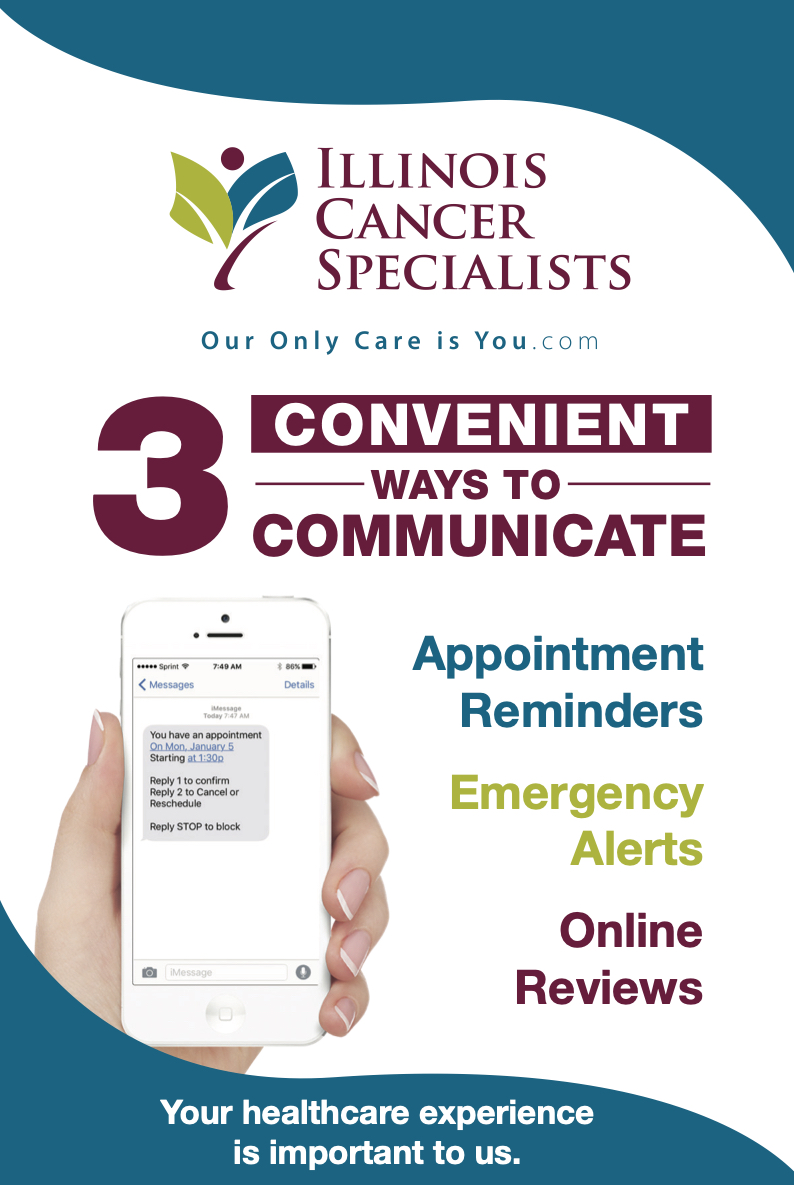 Knowing what to expect and what to take with you to your first appointment can help make things run more smoothly. Because you will be receiving a lot of information, it is a good idea to take along a family member or a friend for support. At your first appointment, you will meet your physician and cancer care team and learn about your diagnosis and treatment options.
Your first visit may include the following:
Click to open a list of questions for your doctor you can print and take with you to your visit.
A diagnosis of cancer or a blood disorder can be frightening. But, today there’s more hope than ever before. At Illinois Cancer Specialists we are devoted to treating you with the best, most effective and advanced therapies available today. And through our clinical research of promising new therapies, we’re finding even better treatments every day giving you and your family hope for tomorrow.
Our highly-skilled physicians and team specialize in the treatment of cancer and diseases of the blood, and we are committed to providing you with the most advanced and personalized care available in a community setting. Our centers are designed with your comfort in mind, and we offer the latest technologies and treatment options, including clinical research trials.
Most importantly, we understand the challenges you and your family face during this uncertain time, and our friendly and caring specialists are dedicated to delivering your personalized care with the compassion and convenience your deserve.